
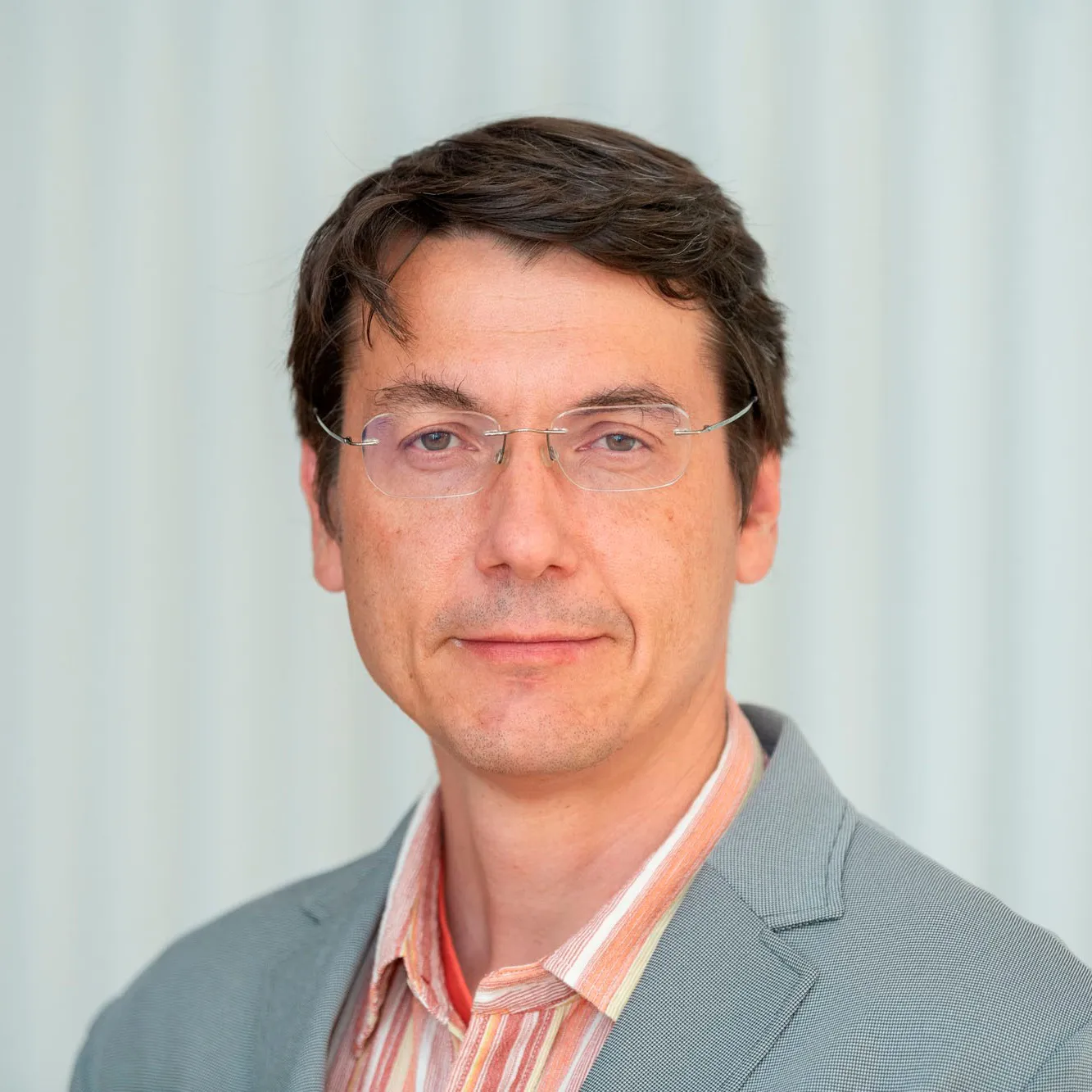
 | Prof. Ivan TyukinSkolkovo Institute of Science and Technology, Russia Ivan Tyukin is a Professor of Artificial Intelligence, Head of the Laboratory for Reliable, Adaptive, and Trustworthy AI, Centre for Artificial Intelligence at Skolkovo Institute of Science and Technology and a Visiting Professor at the School of Data Science, Qingdao University of Science and Technology. He has been awarded a Turing UKRI Acceleration Fellowship, is in list of World Top-2% Scientists according to Elsevier’s/Stanford ranking, and is an Editor of Communications in Nonlinear Science and Numerical Simulations (Elsevier). Professor Tyukin was awarded a PhD in System Analysis, Control, and Information processing in 2001 (Saint-Petersburg State Electrotechnical University, Russia). This was followed by a Doctor of Science (Habilitation) degree in 2006 from the same institution. His research interests span mathematical foundations of robust and reliable AI, data analysis, neural networks, and mathematical modelling. Jointly with colleagues, he established stochastic separation theorems linking geometry and probability in high dimensional spaces. This work enables new methods for computationally efficient learning on the go with guarantees. He is also working on bridging the gap between theory and practice to enable practical frameworks for establishing AI technical reliability, safety, robustness, and utility in real-world scenarios. Title: The challenge of building accurate, reliable, and trustworthy AI |
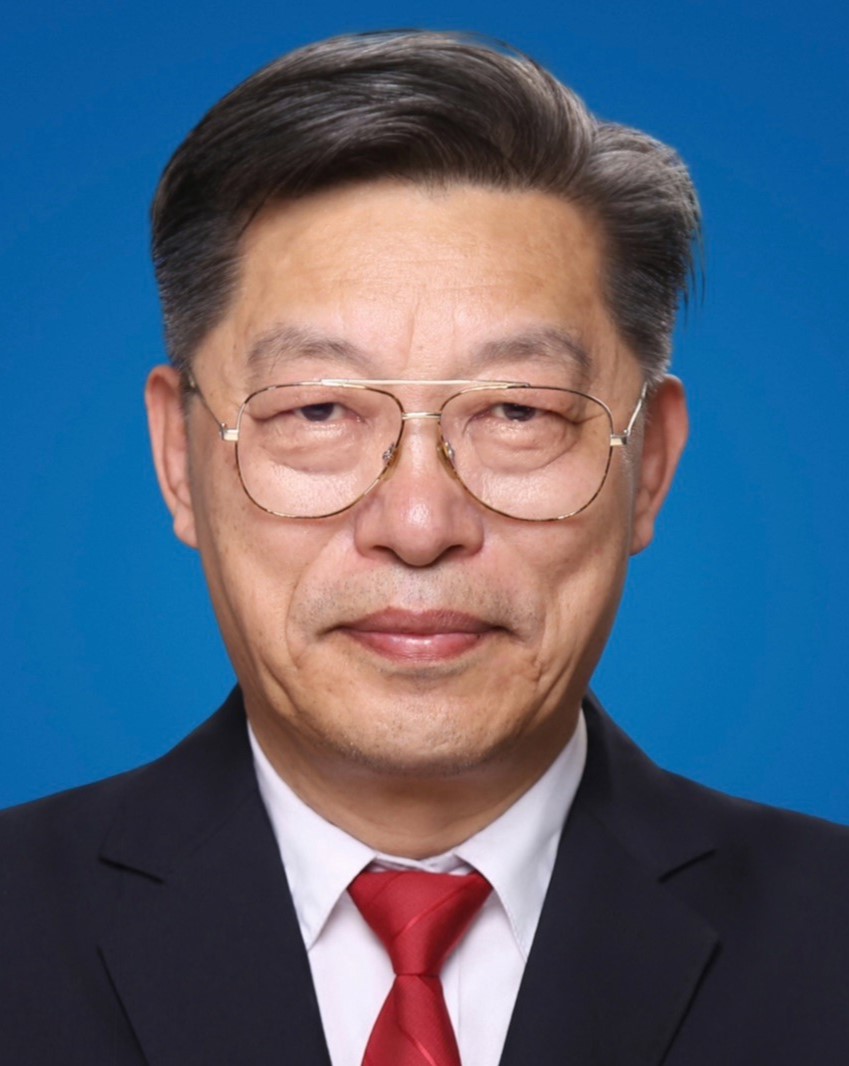 | Prof. Dianhui WangQingdao University of Science and Technology, China Prof. Dianhui Wang is a National Distinguished Expert, Professor, Doctoral Supervisor, and IEEE Senior Member at the School of Data Science, Qingdao University of Science and Technology (QUST), China, and Visiting Professor at Skolkovo Institute of Science and Technology (Skoltech), Russia. He received his Ph.D. in Industrial Automation from Northeastern University, China, in 1995. His research interests include stochastic configuration learning, lightweight artificial intelligence for industrial applications, complex industrial big data modeling, edge intelligence, and prediction and early warning of rare critical events in industrial systems. He is the founder of Stochastic Configuration Networks (SCNs) and Stochastic Configuration Machines (SCMs), with extensive research contributions to intelligent modeling and predictive analytics for complex industrial systems. He is also the Editor-in-Chief of the international journal Industrial Artificial Intelligence (Springer Nature) and has served as an Associate Editor for several IEEE and other internationally renowned academic journals. Title: Issues, Challenges and Developments in Machine Learning for Industrial Intelligence |
 | Prof. Xiao DingHarbin Institute of Technology, China Xiao Ding is a Professor and doctoral supervisor at Harbin Institute of Technology, a National Young Talent, and Deputy Director of the Research Center for Social Computing and Interactive Robotics. His main research interests include artificial intelligence, natural language processing, eventic graphs, and causal reasoning. He has published over 100 papers in top international journals and conferences in the field of artificial intelligence, including TKDE, NeurIPS, ICLR, and ACL. He has led more than ten national-level projects, including projects under the National Key R&D Program and the National Natural Science Foundation of China. He has received the First Prize of the Qian Weichang Youth Innovation Award (Chinese Information Processing Science and Technology Award), the First Prize of the Science and Technology Progress Award of the Ministry of Education, the First Prize of the Heilongjiang Provincial Science and Technology Award, the First Prize of the Wu Wenjun Artificial Intelligence Science and Technology Progress Award, and the ACL 2024 Outstanding Paper Award. He serves as Secretary-General of the Social Media Processing Committee of the Chinese Information Processing Society of China and Deputy Director of the Heilongjiang Provincial Key Laboratory of Chinese Information Processing. Title: Multi-Agent Debate-Based Decision-Making Techniques for Large Language Models |
 | Prof. Jie NieOcean University of China, China Prof. Jie Nie is a Professor and Doctoral Supervisor at Ocean University of China. Her research focuses on interdisciplinary studies at the intersection of artificial intelligence and ocean science. She has published over 100 high-quality research papers and developed key AI technologies for ocean science, including Ocean Multimodal Intelligent Computing. She serves as the Principal Investigator of the Young Scientist Project, Data-Driven Marine Ecosystem Health Assessment, under the National Key Research and Development Program of China. She has also led six national-level research projects, including the National Natural Science Foundation of China (NSFC) Young Scientists Fund (Category B) project Ocean Multimodal Intelligent Computing and the NSFC Regional Joint Fund Key Project Knowledge Evolution and Collaborative Reasoning for Complex Problems in Ocean Big Data, as well as two key research projects at the provincial and ministerial levels. As the first inventor, she holds 48 granted Chinese invention patents. Her research achievements have received one First Prize of the Shandong Provincial Technological Invention Award and two First Prizes of the Shandong Provincial Science and Technology Progress Award. She also serves on the editorial boards of several international academic journals, including IEEE Transactions on Circuits and Systems for Video Technology (IEEE TCSVT), International Journal of Digital Earth (IJDE), and IMTS. Title: Knowledge–Data–Physics Integration: AI-Driven Novel Approaches to Complex Computational Systems for Ocean Science |
 | Prof. Bin GuoNorthwestern Polytechnical University, China Dr. Bin Guo is a professor and vice-dean with the School of Computer Science, Northwestern Polytechnical University, China. He received his Ph.D. degree in computer science from Keio University, Tokyo, Japan, in 2009. His current research interests include Ubiquitous Computing, Mobile Crowd Sensing, and Urban Computing. He has published over 200 papers in refereed journals and conference proceedings such as Nature Reviews, IEEE Comm. Surveys and Tutorials, ACM Computing Surveys, IEEE TMC, IEEE THMS, UbiComp, MobiCom, NeurIPS, etc. He is the founding editor in chief of Embodied and Biomimetic Intelligence, has served as an associate editor of IEEE Communications Magazine, IEEE Trans. on Human-Machine-Systems, ACM IMWUT, and so on. He is the program chair of IEEE CPSCom’16, MUE’19, and GPC’20, the general chair of IEEE UIC’24 and AIoTSys’23. He is a senior member of IEEE and a distinguished member of CCF. He received the support of the National Science Fund for Distinguished Young Scholars in 2020. He is a Highly Cited Chinese Researchers by Elsevier. Title: From Crowd Sensing to Crowd Computing—Harnessing the Power of the Crowd |